Baked beans on toast for two of the world’s richest men
 Brazil’s richest man Jorge Paulo Lemann has teamed up with Warren Buffett to engineer a deal to merge with Heinz which will not generate much enthusiasm amongst the gourmet elite of this world. But the Kraft Heinz merger has everything it takes to get financial markets excited, with the promise of USD 1.5bn annual savings by 2017 and combined sales of USD 29bn, making the future group North America’s third largest food and drink company and the world’s fifth.
Two unknowns remain. Will the Kraft Heinz Company manage to generate growth beyond the annuity it will derive from savings in overhead costs? And can it develop new product lines to evolve away from the very 1970’s image that characterizes much of the present range?
Why Oscar Mayer dogs, Mayo®, HP Sauce®, Jell-O®, Philadelphia® and Kool-Aid® can still generate billions
Changing living patterns and the increasing involvement of women in full-time employment created fast growing demand for time-saving foods through the 1950s until the early 1980’s; this was an era of instant coffee and Wonder Mash® which also witnessed the global expansion of fast-food restaurant chains. But the world has moved on since the days of Macaroni and cheese. Improvements in Supply Chain efficiency combined with advances in food science now allow supermarkets to offer a broad choice of ready meals of increasing sophistication. Today, “convenience” also includes anything from fresh ready-to-eat mango salad to ready-to-cook peeled vegetables, as well as meal modules which consumers can combine to produce healthy balanced meals, with a starter, a main course and a dessert if they so desire, that provide the taste, nutrition value and visual appeal of the “real thing” without all the fuss of starting with basic ingredients.
So with every consumer survey telling us that people are now opting for organic or at least more natural foods from sustainable sources, and with the abundance and variety of quality foods on today’s supermarket shelves, how is it that companies such as Kraft and Heinz still manage to achieve sales that combine to USD 29 billion?
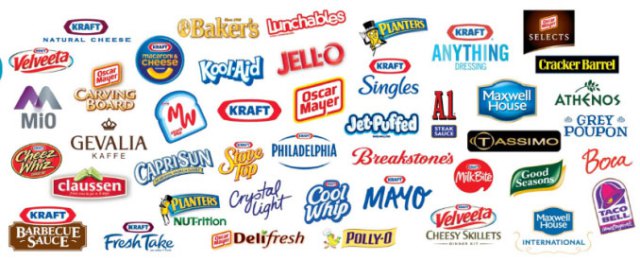
Now spot the missing item : the healthy option
Part of the explanation is to be found in the significant price gap between today’s high quality fresh products and run-of-the-mill heavily processed foods. The average household’s budget priorities have changed over the past decade, with electronic gadgets, leisure and entertainment claiming an increasing share of the consumer’s wallet. It is tempting for large families or for those on lower income to make savings on food when cheap alternatives can provide the same feeling of satiety at a fraction of the cost of the fancier items beautifully displayed on the supermarket shelves.
Secondly, one also needs to bear in mind that decades of mass-produced processed foods have created a degree of addiction to sugar, fat and salt, so that the consumers who opt for a large plate of French fries smeared with a generous layer of Heinz Ketchup may do so by choice rather than as a result of financial constraints.
There is, however, pressure from all sides to move consumers away from the heavily processed and generally unhealthy types of foods that come off the production-lines of companies such as Heinz and Kraft. Eating habits do not change overnight, but the change will happen gradually. Increasingly, the cost saving will become the only justification for buying “junk” food, and when that is the case, consumers guided by the need to make savings might opt for a supermarket’s own brand or a completely generic product rather than “premium branded” processed food. This is not good news for the future Kraft Heinz Company in the longer term.
Management style will change things faster than eating habits
When Brazilian 3G and Warren Buffet’s Berkshire Hathaway acquired Heinz in 2013 and took the company private, it must clearly have been part of their plan to make another acquisition in that sector to create a paradigm shift within Heinz and change the balance of forces on the market. Merging with Kraft turns that potential into a reality. The shake-up is about to begin.


3G have acquired a reputation for very aggressive cost cutting, not just the excess or even the frills, but deep cuts everywhere possible whilst also challenging the priorities and seeking solid justification for any capital project or major item of expenditure. Advertising costs are therefore most likely to be put under close scrutiny. In my first job in the 1970’s as advertising research executive in one of London’s major advertising firms, my line manager told me “advertising is a unique product: we don’t know how it works, the client cannot tell for sure whether it works or not, and if it doesn’t the client doesn’t get his money back”. 3G surely won’t see it that way and today’s advertising gurus will need to come up with convincing reasons to justify every dollar of advertising spend if they want to retain the Kraft Heinz Company’s account.
Once the fat and duplication has been trimmed off the combined business and further savings are achieved through wiser allocation of sales and marketing funds, let us hope that the Kraft Heinz Company will re-invest some of their USD 1.5 billion annual saving into developing new lines of food to regenerate their portfolio, fuel longer term growth, and preserve the notoriety of those household brand names.
No celebrations for the banks this time
As not all mergers end up being successful, conventional wisdom would say that mergers and acquisitions present shareholders with the potential for value creation, whereas they offer banks and advisers immediate value through fees and financing arrangements. The deal struck by Warren Buffett and Jorge Paulo Lemann is about to cause a serious dent in that conventional wisdom.
A merger of the magnitude of Heinz and Kraft’s would normally be toasted with champagne by the investment banks whose names invariably pop-up each time a deal is struck. But in this particular case, the only toast will be the one covered in humble Heinz baked beans, because the two giants behind the deal are sitting on huge cash reserves and will not need big financing. This means that Wall Street’s major banks will all miss out on their share of what is currently being tagged as the biggest M&A deal of 2015.
Oh well, we’ve only just reached the end of Quarter 1, there is still some time for other big guys to spark off a few more “biggest M&A deals of 2015” during the coming nine months.
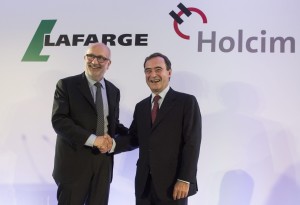
 Just over a decade ago, uniting Holcim and Lafarge would have been unthinkable. Regulators used to spend their time and energy scrutinizing the cement industry to detect any signs of collusion between the key operators of what had already been an oligopoly for many years. But in today’s global scale economy, European regulators have become less shy about allowing the formation of giant companies capable of capturing sizable shares of the market in major European countries; after all, Europe needs a few such global heavy-weights to avoid being completely dwarfed by Asia and the Americas.
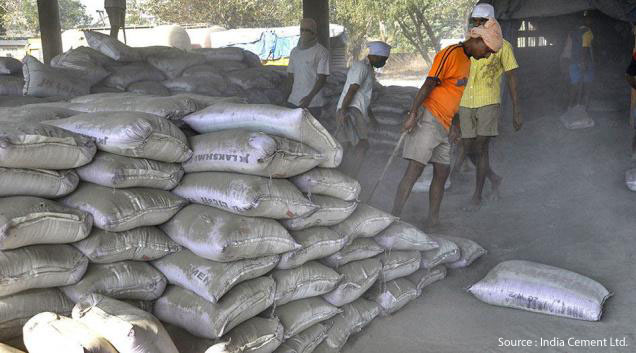 Whereas the course of events in Europe has followed a well predicted roadmap, the unpleasant surprise on the path to Holcim and Lafarge’s union has now come from India where the regulators fear that the Holcim – Lafarge deal would cause a serious imbalance on their very vast and growing market. In an interesting and quite unusual move, India’s CCI (Competition Commission of India) required Holcim and Lafarge to publish the details of their proposed deal on their respective websites as well as in a selection of national newspapers, so that every interested party in the Indian subcontinent could have access to the relevant information and be given sufficient time to formulate comments and possible objections. This is only the second time that a merger proposal is submitted to general public scrutiny under Section 29(3) of India’s Competition Act, 2002.
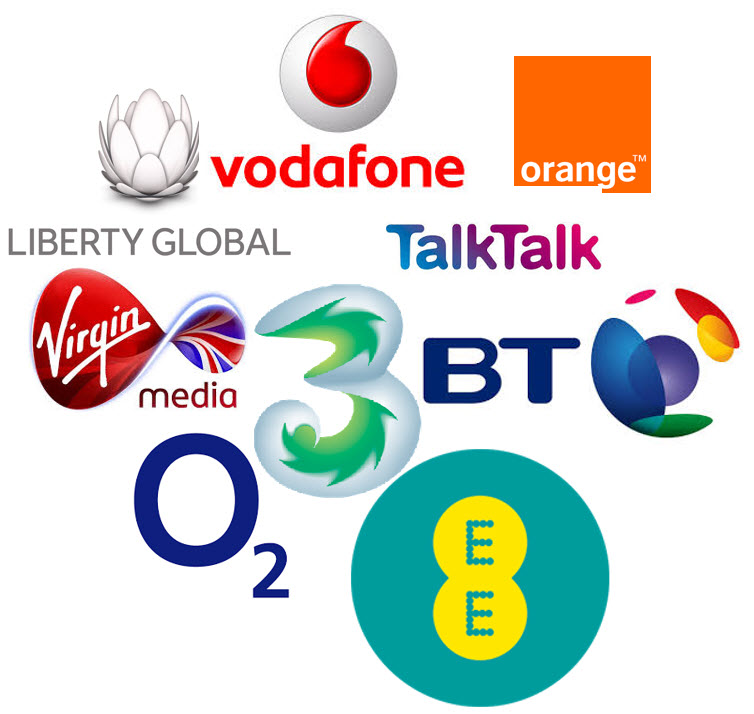 Just in the same way mobile phone tariffs are difficult to decipher, those all-in-one “quad” service bundles blur the cost of each of the services; and so the proliferation of such bundle offers in recent years is possibly better explained by the fact that they protect the operators’ margins rather than offer the end-users any tangible benefits. If that were not the case, the take-up of these new bundle offers would have seduced more than the current 17% of users who have subscribed to them. Selecting a common supplier for fixed telephone and broadband makes logical sense, particularly with the generalisation of voice over IP, but I strongly suspect that the choice of mobile provider is also strongly influenced by territory coverage (which is still quite imperfect in the UK), roaming tariffs and the choice of features offered by the operator, rather than a supposed simplification resulting from having just one supplier for all of the services.